
Used Chiller for Sale: Top Factors to Consider When Purchasing a Used Chiller

If you are searching for a used chiller for sale, the most important factors to consider are cooling capacity, equipment condition, efficiency, refrigerant type, and supplier reliability. Industrial chillers are critical pieces of infrastructure that remove heat from processes, equipment, and facilities. Choosing the wrong unit can lead to higher energy costs, reduced performance, and unexpected downtime.
A used chiller can be a practical option when the equipment has been properly maintained and inspected. Many industrial chillers operate reliably for 15 to 25 years when maintained correctly, meaning refurbished equipment can still deliver strong performance at a lower cost than buying new systems. This is why manufacturers, food processors, plastics companies, and data facilities regularly search for a used chiller for sale when expanding operations or replacing ageing equipment.
Source: ASHRAE HVAC Systems and Equipment Handbook.
The key is understanding what to look for before making a purchase. Factors such as compressor condition, cooling capacity, refrigerant compliance, and service history can determine whether a used system provides long-term value or becomes a costly mistake.
At Circular Cooling, businesses can find inspected industrial cooling systems including air-cooled and water-cooled units from manufacturers such as Trane, Daikin, Sabroe, Climaveneta, Aermec, and Airedale. Their inventory includes systems designed for a wide range of cooling loads, from smaller process applications to large-scale industrial operations.
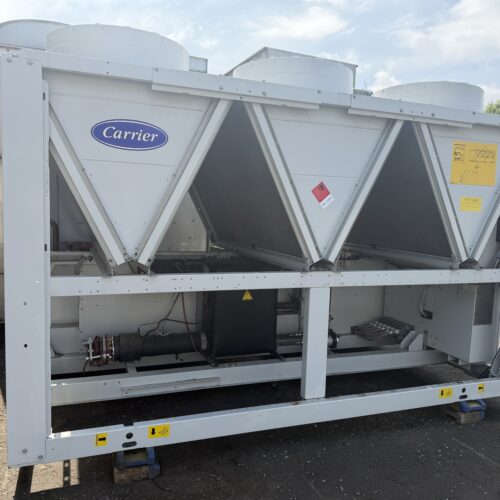
Carrier 30RBP410R
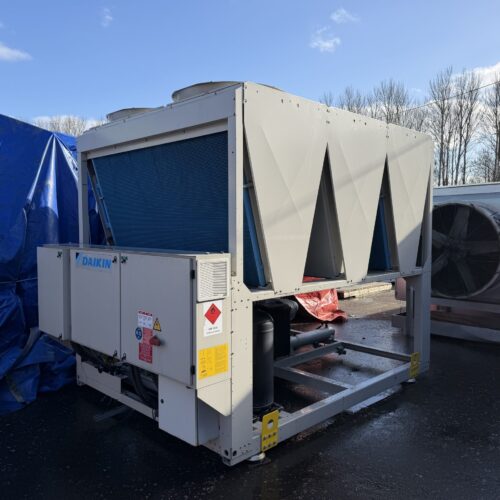
DAIKIN EWAT330B
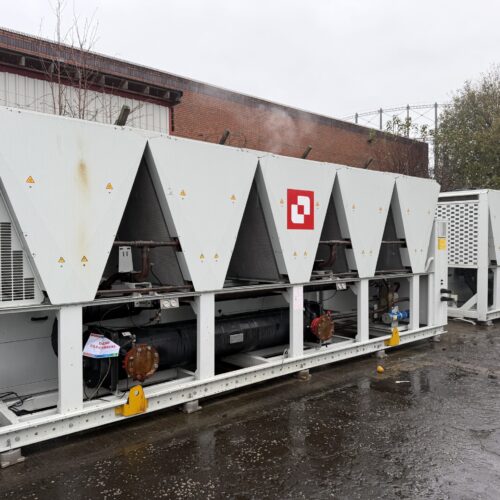
1. 10 Key Factors to Consider When Buying a Used Chiller
If you are evaluating a used chiller for sale, the decision should go beyond price alone. Industrial chillers are long-term infrastructure assets. Choosing the right unit requires careful assessment of performance capability, reliability, regulatory compliance, and operating costs.
Below are ten critical factors businesses should review before purchasing a used chiller.
1. Cooling Capacity and Load Requirements
The first step is confirming the cooling capacity needed for your facility. Chiller capacity is usually measured in kilowatts (kW) or tons of refrigeration.
A system that is too small will struggle to maintain temperature stability. A system that is too large may cycle inefficiently and increase energy consumption.
Cooling load calculations should consider:
- Process heat generation
- Ambient temperature conditions
- Equipment heat output
- Operating hours
Matching the correct capacity is essential for performance and efficiency.
2. Chiller Type and Configuration
Industrial chillers come in different configurations, and selecting the right type is important.
Common types include:
- Air-cooled chillers
- Water-cooled chillers
- Screw compressor chillers
- Scroll compressor chillers
- Centrifugal chillers
Air-cooled systems are typically easier to install, while water-cooled systems are often more energy efficient for large facilities.
Understanding the configuration ensures the system integrates properly with existing infrastructure.
3. Age of the Equipment
Industrial chillers can operate for 15 to 25 years depending on maintenance and usage.
Older equipment may still perform well if it has been properly serviced. However, the age of the system affects:
- Component wear
- Availability of spare parts
- Energy efficiency
A chiller manufactured within the last decade may offer improved controls and efficiency compared with older models.
4. Maintenance and Service History
Maintenance records provide insight into how the equipment has been operated and serviced.
A reliable used chiller should have documented service history showing:
- Compressor servicing
- Refrigerant maintenance
- Electrical inspections
- Heat exchanger cleaning
Lack of maintenance records may indicate higher risk of hidden faults.
5. Refrigerant Type and Environmental Compliance
Refrigerant regulations are changing worldwide due to environmental policies.
Some older refrigerants are being phased out because they have high global warming potential. For example, the EU F-Gas Regulation restricts certain refrigerants used in cooling systems.
Buyers should confirm:
- Which refrigerant the system uses
- Whether it complies with current regulations
- Future availability of the refrigerant
This helps avoid compliance problems and expensive retrofits.
6. Energy Efficiency and Operating Costs
Energy consumption is one of the largest lifetime costs of an industrial chiller.
Even if a used chiller for sale has a lower purchase price, inefficient equipment can lead to higher electricity bills over time.
Efficiency can be evaluated through:
- Coefficient of Performance (COP)
- Energy Efficiency Ratio (EER)
- Compressor design and control systems
Energy-efficient systems reduce operating costs and environmental impact.
7. Compressor Condition
The compressor is the core component of a chiller system and often the most expensive part to repair or replace.
When inspecting a used chiller, buyers should check:
- Operating hours
- Noise or vibration level
- Oil quality and lubrication
- Previous compressor repairs
A well-maintained compressor significantly increases the reliability of the system.
8. Heat Exchanger Condition
Heat exchangers are responsible for transferring heat from the process fluid to the refrigeration system.
Over time they can suffer from:
- Scaling
- Corrosion
- Fouling
These issues reduce cooling performance.
Inspection should include checking:
- Tube integrity
- Evidence of leaks
- Cleaning history
Properly maintained heat exchangers maintain system efficiency.
9. Control Systems and Automation
Modern chillers include advanced digital control systems that monitor temperature, pressure, and system performance.
Older units may use outdated control technology.
Updated control systems provide:
- Improved system monitoring
- Better temperature accuracy
- Remote diagnostics
These features can help reduce maintenance downtime.
10. Supplier Reliability and Equipment Inspection
Perhaps the most important factor when buying a used chiller for sale is the reliability of the supplier.
Specialist cooling suppliers typically inspect and test equipment before resale. This reduces the risk associated with purchasing used industrial machinery.
Reputable suppliers will often provide:
- Technical specifications
- Equipment inspection reports
- Operational testing
- Advice on system compatibility
Companies such as Circular Cooling specialise in sourcing and supplying used industrial chillers from manufacturers including Trane, Daikin, Sabroe, Aermec, and Climaveneta.
Working with an experienced supplier helps ensure the system meets the operational needs of your facility.
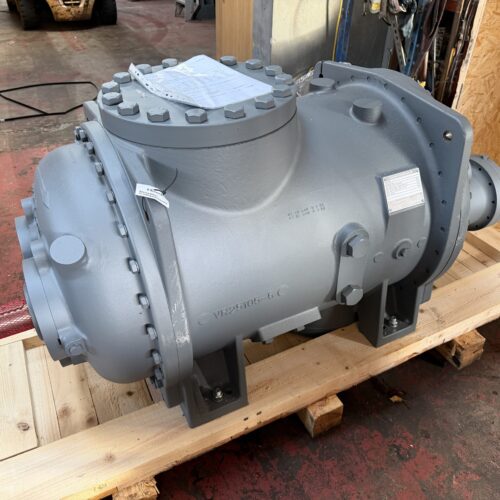
Howden WRVi 255/193
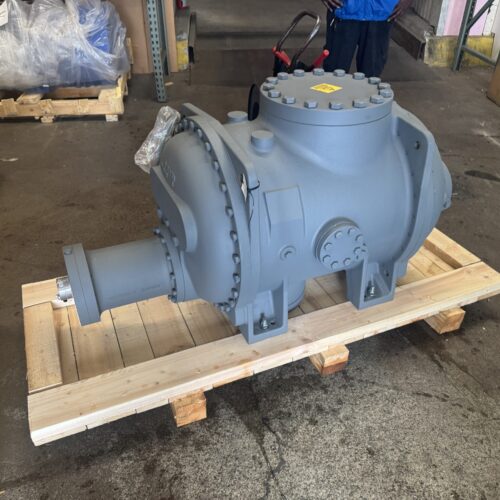
Howden WRVi 255/145
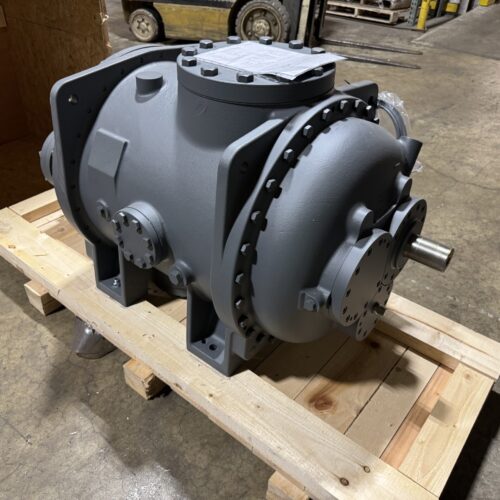
Howden WRVi 255/130
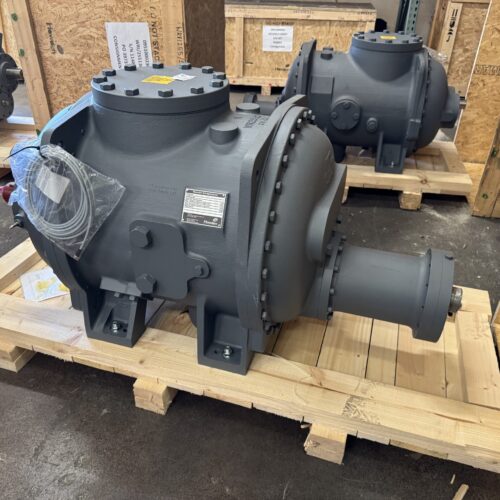
Howden WRVi 255/110
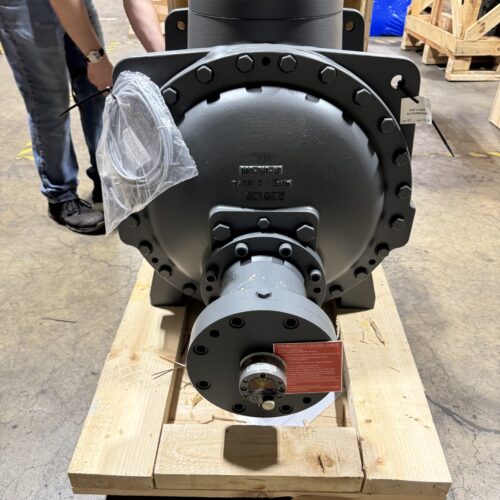
Howden WRV 204 193/50

Howden WRV 204 193/36
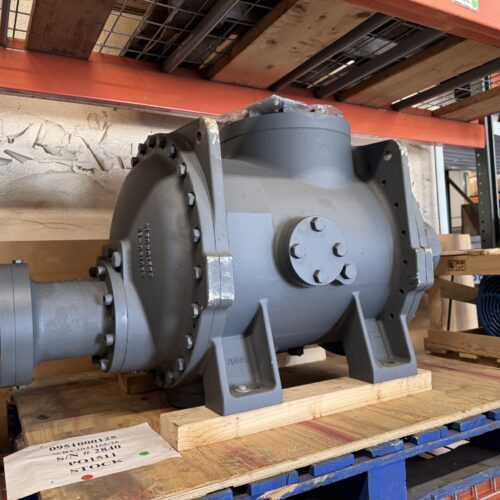
Howden WRV 204 165/26
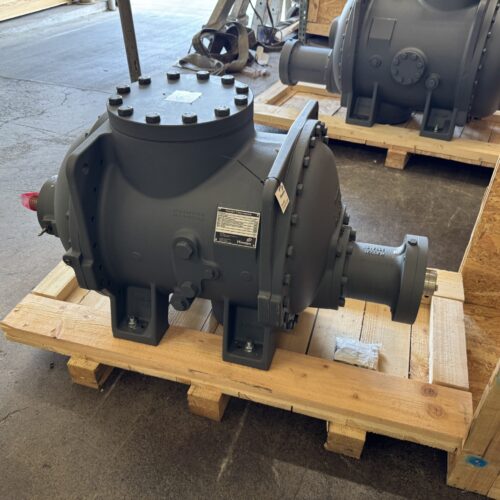
Howden WRV 204 145/50
2. Why Businesses Search for a Used Chiller
Industrial facilities rely on consistent cooling to maintain equipment performance, product quality, and safe working conditions. When cooling demand increases or existing equipment reaches the end of its service life, companies begin searching for a used chiller for sale as a practical solution.
Several factors drive this demand.
Many facilities need cooling equipment quickly due to production growth, system failures, or seasonal heat loads. Purchasing a refurbished unit can often reduce lead times compared to ordering a new system, which may take months to manufacture and deliver.
Companies also look for used equipment when they want to expand production capacity without committing to the high capital expenditure associated with new industrial chillers.
In addition, some businesses prefer used systems when running pilot projects or temporary cooling operations. A refurbished chiller can provide the necessary capacity while reducing financial risk.
3. Cost Pressures in Manufacturing and Data Infrastructure
Energy-intensive industries are under constant pressure to control operational costs. Cooling systems are often one of the largest energy consumers within industrial environments.
Manufacturing facilities, data centres, food processing plants, and pharmaceutical operations all rely on temperature control to maintain production stability. If cooling systems fail or operate inefficiently, the financial impact can be significant.
Because cooling infrastructure represents such a large investment, companies often explore the market for a used chiller for sale as a way to manage capital expenditure while still maintaining operational performance.
Used systems can allow businesses to upgrade cooling capacity without the full financial burden of purchasing new equipment.
4. What Is an Industrial Chiller and How Does It Work
An industrial chiller is a cooling system designed to remove heat from liquids, typically water or a water-glycol mixture. The cooled liquid is then circulated through machinery or processes to maintain stable operating temperatures.
Industrial chillers are used to regulate temperature in manufacturing equipment, production lines, air conditioning systems, and refrigeration processes.
The cooling process works through a refrigeration cycle that involves:
- Removing heat from process water
- Transferring that heat through a refrigeration system
- Rejecting the heat to air or water through a condenser
This cycle continuously removes excess heat from equipment and facilities.
Without effective cooling systems, machines can overheat, product quality can decline, and production processes may stop entirely.
5. Core Components of a Chiller System
When evaluating a used chiller for sale, it is important to understand how an industrial chiller actually works. A chiller removes heat from water or process fluids and transfers that heat elsewhere. The cooled liquid is then circulated through equipment, production processes, or building systems to maintain safe operating temperatures.
Most industrial chillers operate using a vapour-compression refrigeration cycle, which relies on four primary components: the compressor, condenser, evaporator, and expansion device. These elements work together to remove heat continuously from the system.
Source: ASHRAE HVAC Systems and Equipment Handbook.
Understanding these components can help businesses assess the condition of a unit when searching for a used chiller for sale.
1. Compresor
The compressor is the main mechanical component of a chiller system. Its role is to circulate refrigerant through the refrigeration cycle while increasing its pressure and temperature.
During operation:
- Low-pressure refrigerant vapour enters the compressor.
- The compressor compresses the vapour, increasing pressure.
- High-pressure refrigerant then flows to the condenser.
Several compressor technologies are commonly used in industrial chillers:
- Scroll compressors – typically used in smaller systems
- Screw compressors – widely used in industrial process cooling
- Centrifugal compressors – used for very large cooling capacities
The compressor is often the most expensive component to replace. For this reason, its condition should always be checked when evaluating a used chiller for sale.
2. Condenser
The condenser removes heat from the refrigerant after it leaves the compressor. This heat must be released into the surrounding environment for the refrigeration cycle to continue.
There are two main types of condenser used in industrial chillers.
- Air-cooled condensers
Heat is discharged directly into the surrounding air using fans and condenser coils. These systems are commonly used where water supply is limited.
- Water-cooled condensers
Heat is transferred to water, which is then cooled using a cooling tower. Water-cooled chillers are typically more energy efficient in large industrial installations.
3. Evaporator
The evaporator is the component where cooling takes place.
Within the evaporator:
- Refrigerant absorbs heat from process water.
- The refrigerant evaporates into vapour.
- The cooled water is circulated back to the system.
Industrial evaporators are usually built using shell-and-tube heat exchangers or plate heat exchangers.
If the evaporator becomes fouled or blocked, the chiller will struggle to maintain stable temperatures.
4. Válvula de expansión
The expansion valve regulates the flow of refrigerant entering the evaporator. It reduces the pressure of the refrigerant, allowing it to expand and absorb heat.
Common expansion devices include:
- Thermostatic expansion valves (TXV)
- Electronic expansion valves (EEV)
Proper operation of this component ensures stable cooling performance and efficient system operation.
5. Control System
Modern chillers include electronic control systems that monitor the performance of the entire unit.
These control systems typically manage:
- Temperature regulation
- Refrigerant pressure
- Compressor operation
- Safety shutdowns
Advanced control systems help detect faults early and maintain stable operating conditions.
Older units may use simpler controls, although some refurbished chillers include upgraded control technology.
6. Pumps and Fluid Circulation
Industrial chillers also rely on pumps to circulate chilled water or coolant throughout the facility.
These pumps distribute cooled fluid to:
- Manufacturing equipment
- Heat exchangers
- Air handling units
- Production lines
Reliable fluid circulation is essential to maintain consistent temperature control.
7. Heat Exchangers
Heat exchangers play a key role in transferring heat between refrigerant and water within the system.
Over time, heat exchangers can develop scale, corrosion, or fouling, which reduces cooling efficiency. When inspecting a used chiller for sale, the condition of the heat exchangers should always be checked.

DAIKIN EWAT220B
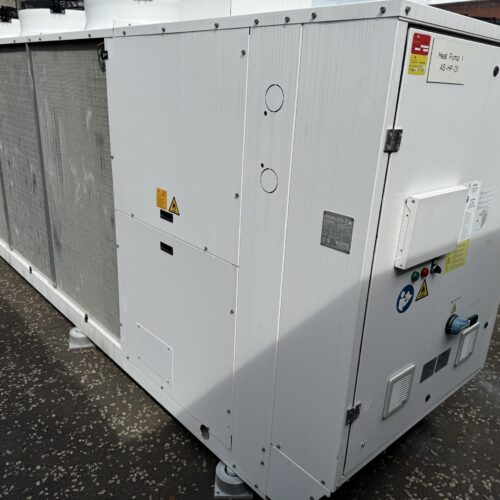
Aermec NRG0802
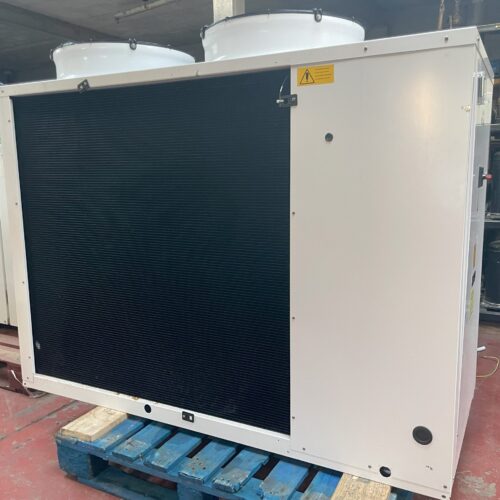
Airedale ECL202 PV

Emerson CL0458
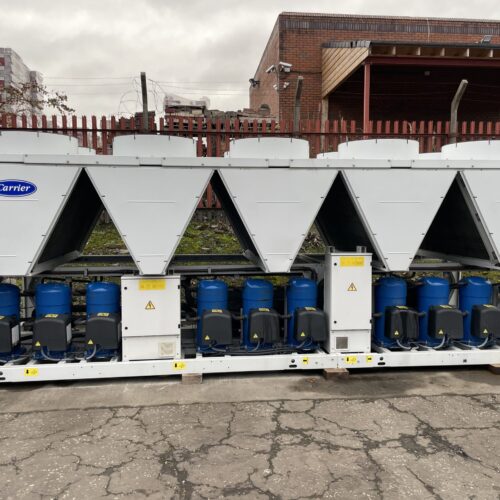
Portador 30RB0672

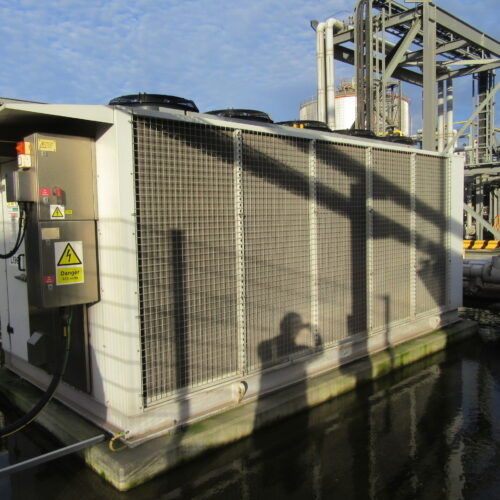

DAIKIN EWWQ720L
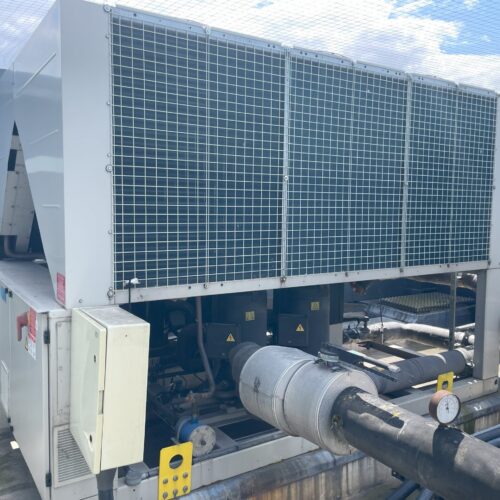
DAIKIN EWAQ320
6. Why Understanding These Components Matters
Each of these components affects the reliability and efficiency of a chiller system. When purchasing used cooling equipment, buyers should ensure that the system has been properly inspected and maintained.
Working with specialist suppliers such as Circular Cooling can help ensure that industrial chillers are evaluated before resale, reducing the risk associated with buying used equipment.
7. Chiller Types and Technology
When reviewing the available equipment market, buyers will find many different models and capacities.
Examples of equipment available from Circular Cooling include:
Product | Stock Number | Visite | Modelo | Capacidad nominal |
Trane CGAF 140 SE SN | CC25/1255 | Trane | CGAM090 SE CPCT | 467 kW |
Trane CGAM 090 SE CPCT | CC25/1254 | Trane | CGAM090 SE CPCT | 249 kW |
Enfriador Sabroe ChillPAC | CC25/248 | Sabroe | ChillPAC 116 L | 702 kW |
Climaveneta FX/K/S 2722 | CC25/1248 | Climaveneta | FX/K/S 2722 | 678 kW |
Hitema SBS160 Aqua Pro | CC25/1245 | Hitema | SBS160 | 160 kW |
Hitema SBS160 | CC24/241 | Hitema | SBS160 | 203.43 kW |
Daikin EWAT220B | CC24/239 | Daikin | EWATB 220 | 226 kW |
Aermec NRG0802 | CC24/234 | Aermec | NRG0802 | 150 kW |
Airedale ECL202 PV | CC23/227 | Airedale | ECL202 PV | 43.5 kW |
These units vary widely in cooling capacity and technology, demonstrating how businesses can find solutions suited to different operational requirements.
8. When a Used Chiller Makes More Sense Than Buying New
In many situations, purchasing a used chiller for sale can be a more practical choice than investing in a new system. Industrial chillers are designed to operate for many years when properly maintained, and refurbished units can often provide reliable cooling performance at a lower capital cost. For businesses managing tight budgets, a used chiller allows essential cooling infrastructure to be installed without the significant upfront investment required for new equipment. This can be particularly valuable for manufacturers or processing facilities that need to control expenditure while maintaining production capacity.
A used chiller can also be the right option when cooling demand is temporary or when facilities are expanding. For example, companies may require additional cooling capacity during peak production periods, equipment upgrades, or facility extensions. In these cases, sourcing a used chiller for sale can provide a faster and more flexible solution, as refurbished systems are often available for immediate delivery compared with new units that may have long manufacturing lead times. This approach allows organisations to respond quickly to operational changes while maintaining reliable temperature control across their processes.
9. Benefits of Buying a Used Chiller
For many UK businesses, purchasing a used chiller for sale can provide a practical and cost-conscious solution when expanding cooling capacity or replacing ageing equipment. Industrial chillers are built for long service lives, and well-maintained units can still deliver reliable performance while helping companies manage capital expenditure and installation timelines.
- Lower Capital Cost – Used chillers typically cost significantly less than new systems, helping businesses maintain operational cooling without committing to large upfront investments.
- Faster Availability – Many refurbished units are already in stock, allowing businesses to install cooling capacity quickly rather than waiting months for new equipment manufacturing and delivery.
- Proven Equipment Performance – Established chiller models from recognised manufacturers have known reliability records and tested operating performance across many industries.
- Sustainable Equipment Choice – Purchasing refurbished cooling systems supports the circular economy by extending equipment lifespan and reducing manufacturing demand and material waste.
- Flexible Capacity Expansion – Used chillers allow businesses to increase cooling capacity during expansion projects, seasonal demand changes, or temporary production growth.
If your facility requires dependable cooling while managing investment costs, exploring a used chiller for sale can be a practical step. View current equipment availability and speak with the team at Circular Cooling to discuss suitable options for your system.
10. Common Industries That Buy Used Chillers
Several sectors regularly purchase refurbished cooling equipment.
These include:
- Manufacturing companies
- Food and beverage producers
- Plastic injection moulding facilities
- Data centres
- Pharmaceutical and chemical plants
- Cold storage warehouses
- Commercial HVAC installations
In each of these sectors, cooling reliability is critical for maintaining production efficiency and equipment longevity.
11. Where to Find a Reliable Used Chiller
Finding a reliable used chiller for sale requires more than simply locating available equipment. Businesses in the UK should prioritise specialist suppliers who understand industrial cooling systems and can verify the condition, capacity, and performance of the equipment before resale. Purchasing through experienced refrigeration or process cooling suppliers helps reduce the risks often associated with used industrial machinery. Reputable suppliers will typically inspect the unit, confirm technical specifications, and provide guidance on whether the chiller is suitable for the intended application. They can also advise on installation requirements, compatibility with existing systems, and any maintenance considerations.
Working with established providers such as Circular Cooling allows UK businesses to access a range of inspected industrial chillers from recognised manufacturers including Trane, Daikin, Sabroe, Climaveneta, Aermec, and Airedale. These suppliers focus specifically on industrial cooling equipment, making it easier for buyers to compare models, cooling capacities, and system types before making a decision. If your organisation is looking for a used chiller for sale, sourcing equipment from a specialist supplier can help ensure reliability, regulatory compliance, and long-term performance for your cooling system.
Conclusión
Choosing the right used chiller for sale requires careful evaluation of cooling capacity, equipment condition, efficiency, and supplier credibility. Industrial cooling systems represent a significant investment, and selecting the wrong system can lead to operational disruptions and higher long-term costs.
However, when sourced from reputable suppliers and properly inspected, used chillers can provide reliable performance, faster delivery times, and substantial cost savings compared to new systems. For businesses seeking industrial cooling equipment, working with experienced suppliers such as Circular Cooling can help ensure that the selected system meets operational requirements while reducing risk.